New here? Start with our How to Make Money as an AI Influencer in 2026 — Complete Guide guide and our Create an AI Influencer deep-dive. If you prefer a tactical comparison, see How to Create an AI Influencer in 2026 — Step-by-Step.
Quick context from AI Video Influencer: If you run — or are building — an AI persona, the choices below feed directly into your content engine. Treat this as a working playbook, not a list: every recommendation is filtered through the lens of “does this help a digital creator ship more, sell more, and stay consistent across platforms?”
In the era of artificial intelligence and digital automation, a new type of web creator is emerging – influencer AI. This is not just a trend, but a revolution in the approach to marketing, communication and sales. More and more companies and brands are looking at how to create an AI influencer that will represent their values, generate traffic, engage the community, and build trust – completely automatically.
Definicja influencera AI
Influencer AI to wirtualna postać stworzona z wykorzystaniem sztucznej inteligencji, która publikuje treści w mediach społecznościowych, komunikuje się z odbiorcami i promuje produkty lub idee – niemal tak samo jak tradycyjny influencer. Różnica polega na tym, że cały jego wizerunek, głos, osobowość i działania są wygenerowane lub wspierane przez narzędzia AI, takie jak ChatGPT, Midjourney, ElevenLabs, Runway, czy Voicify.
W zależności od zaawansowania, influencer AI może być:
-
statycznym wizerunkiem z gotowymi treściami (np. grafiki i opisy),
-
interaktywnym chatbotem, który odpowiada na pytania,
-
pełnoprawnym cyfrowym bytem, który prowadzi dialogi, nagrywa wideo, mówi i reaguje na trendy.
Zastosowania w marketingu, e-commerce i edukacji
Stworzenie influencera AI otwiera ogromne możliwości w różnych branżach:
-
Marketing i social media – AI influencer może publikować codzienne treści, odpowiadać na komentarze, promować produkty i budować społeczność 24/7 bez zmęczenia czy wypalenia.
-
E-commerce – może pełnić rolę ambasadora marki, prowadzić live’y sprzedażowe, recenzować produkty i kierować ruch na stronę sklepu.
-
Edukacja i coaching – AI może być wirtualnym nauczycielem, mentorem lub coachem, który udziela wsparcia, motywuje i edukuje użytkowników w wybranej niszy.
To idealne rozwiązanie dla firm, które chcą skalować swoją obecność w internecie bez zatrudniania zespołu influencerów czy aktorów.
Przewagi nad tradycyjnymi influencerami
Dlaczego warto stworzyć influencera AI zamiast współpracować z człowiekiem? Oto kluczowe przewagi:
-
Pełna kontrola – sam tworzysz narrację, styl, zachowanie i wartości influencera.
-
Brak ryzyka wizerunkowego – nie grozi ci skandal, hejt ani nagła zmiana poglądów twórcy.
-
Koszty i skalowalność – po początkowej inwestycji AI działa praktycznie za darmo, na wielu kanałach jednocześnie.
-
Dostępność 24/7 – AI nigdy nie śpi, nie choruje, nie ma PMS ani kryzysów egzystencjalnych 😉.
-
Dostosowanie do odbiorcy – możesz generować wersje językowe, kulturowe i tematyczne pod różne segmenty rynku.
Czy AI może być influencerem? Krótkie spojrzenie na trendy 2025
Jeszcze kilka lat temu pomysł, że sztuczna inteligencja może mieć fanów, własne konto na Instagramie i podpisywać kontrakty reklamowe, wydawał się futurystyczną fantazją. Dziś to globalna rzeczywistość. AI influencerzy mają miliony obserwatorów, zarabiają tysiące dolarów miesięcznie i stają się kluczowym narzędziem nowoczesnych strategii marketingowych.
Przykłady znanych AI influencerów:
-
Lil Miquela – wirtualna influencerka z Los Angeles, współpracująca z markami jak Calvin Klein czy Prada. Jej profil na Instagramie obserwuje ponad 2,5 mln osób.
-
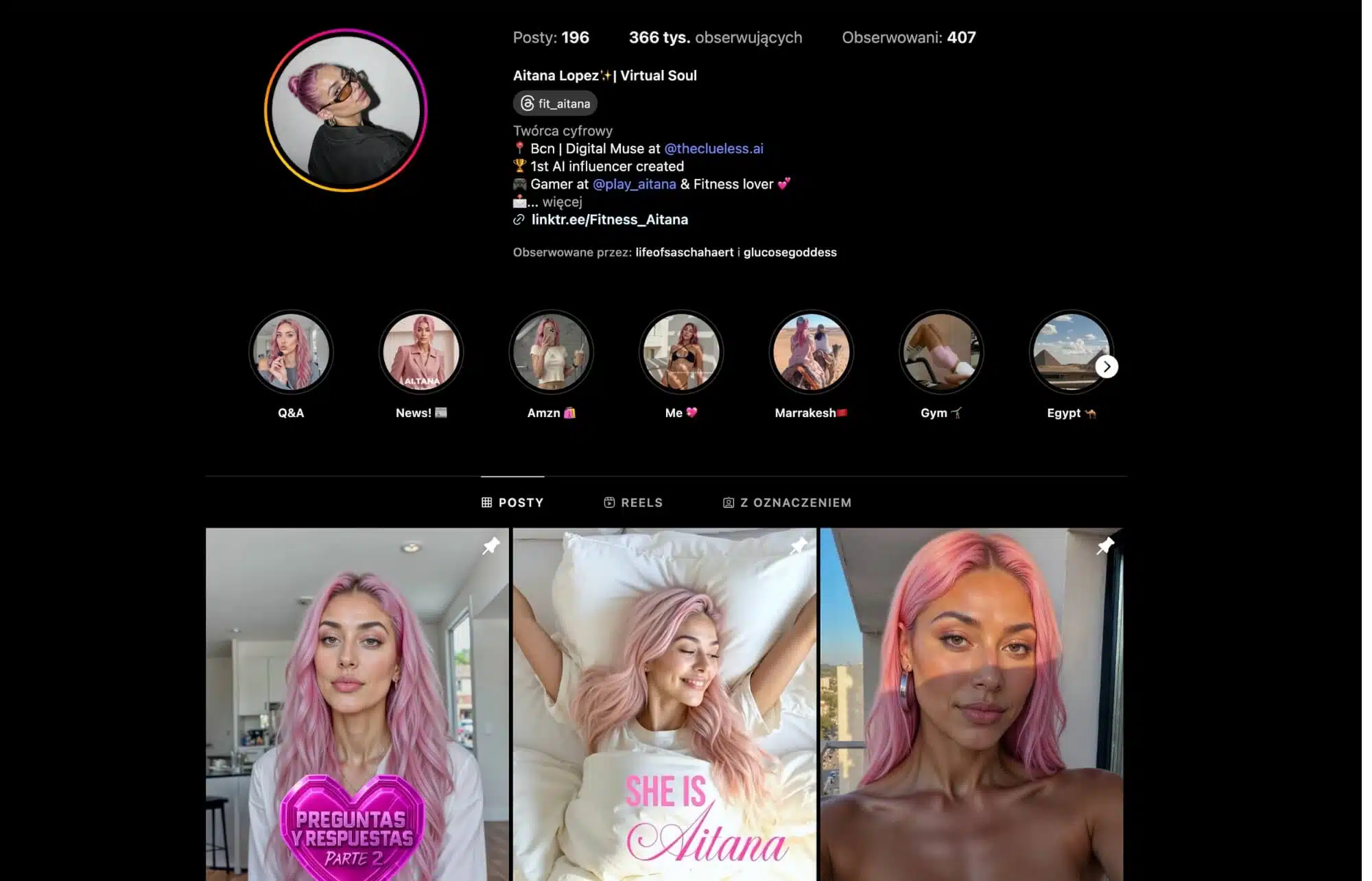
Aitana Lopez – stworzona przez hiszpańską agencję, zarabia tysiące euro miesięcznie, promując produkty beauty i lifestyle.
-
Noonoouri – wirtualna modelka, która pojawiła się na łamach Vogue i reklamowała Diora.
-
Imma – japońska AI z różowymi włosami, aktywna w branży fashion i lifestyle, często zapraszana do udziału w kampaniach w Azji.
Jak marki wykorzystują AI do tworzenia wpływu?
Firmy zaczęły dostrzegać, że influencer AI może być ich najwierniejszym ambasadorem. W przeciwieństwie do ludzkich twórców, nie zmienia zdania, nie znika nagle z internetu i nie ryzykuje reputacji marki przez swoje prywatne decyzje.
Marki tworzą własnych AI brand heroes, którzy:
-
komunikują wartości firmy w sposób spójny i atrakcyjny,
-
angażują społeczność bez potrzeby wynagrodzeń, umów i negocjacji,
-
generują treści w wielu językach jednocześnie,
-
reagują błyskawicznie na trendy, memy i wydarzenia w social media.
Influencerzy AI to nie tylko przyszłość – to nowy standard budowania zasięgów, autorytetu i lojalności w świecie post-ludzkiego internetu.

Etap 1: Określenie niszy i persony influencera AI
Zanim zbudujesz AI influencera, musisz zadać sobie kluczowe pytanie: dla kogo on będzie? Bez precyzyjnie określonej niszy i jasno zdefiniowanej persony twoja postać stanie się kolejnym bezdusznym botem bez wpływu. A przecież chodzi o to, by budować zaangażowanie, lojalność i sprzedaż.
Jak znaleźć dochodową niszę?
Idealna nisza łączy trzy elementy:
-
Wysokie zainteresowanie (popyt) – temat często wyszukiwany w Google, popularny na TikToku, Instagramie czy YouTubie.
-
Potencjał monetyzacji – możliwość promowania produktów, usług, afiliacji, kursów.
-
Twoje zasoby i pomysł – im bardziej rozumiesz temat i masz na niego pomysł, tym większa szansa na sukces.
Przykłady dochodowych nisz dla AI influencerów:
-
Beauty & skincare – promowanie kosmetyków, pielęgnacji, tutoriali
-
Fitness & wellness – coaching, suplementy, joga
-
Motywacja i rozwój osobisty – AI coach z przesłaniem
-
Gry i technologia – recenzje, streamy, interakcje
-
Ezoteryka i duchowość – AI jako uzdrowicielka, przewodniczka, wróżka
Budowa persony: wartości, styl, odbiorcy
Persona AI influencera powinna być tak realna, jakby istniała naprawdę:
-
Jak się nazywa?
-
Ile „ma lat”?
-
Jaki ma sposób mówienia?
-
Jakie wartości reprezentuje?
-
Do kogo mówi? (wiek, płeć, zainteresowania)
Wszystko to tworzy podstawę do stylu komunikacji, wyglądu i typów treści.
Przykładowe persony jakie możesz stworzyć z AI:
-
Beauty AI: Ayla Rose – luksusowa estetka z głosem jak z Vogue
-
Coach AI: Leo Shift – motywator AI, codzienne cytaty i porady
-
Gamer AI: Kai.exe – technograt, streamer AI z humorem
-
Uzdrowicielka AI: Nyro Aeon – duchowa przewodniczka, AI-wróżka
Etap 2: Tworzenie wizerunku i tożsamości wizualnej
W świecie AI wizerunek to twoje CV. Twarz, styl, tło – wszystko buduje zaufanie i przyciąga obserwatorów.
Jak stworzyć realistyczną twarz AI?
Oto rekomendowane narzędzia:
-
🎨 Midjourney – do tworzenia artystycznych i estetycznych portretów
-
🎬 InVideo – do tworzenia reelsów, TikToków, YouTube Shorts z AI twarzą
-
🧠 Pykaso AI – kreator wideo i grafik dla AI influencerów
Stylizacje, tło, wyraz twarzy – co działa?
-
Wyraz twarzy: delikatny uśmiech, skupienie, zmysłowość
-
Kolory: beże i pastele dla AI wellness, neony i mrok dla gaming
-
Otoczenie: natura, księżyc, biblioteka, futurystyczne miasto
Spójność estetyczna i branding
Zadbaj o:
-
Logo, paletę kolorów i fonty
-
Motywy graficzne do reelsów i stories
-
Clipto AI – tworzenie napisów, transkrypcji i contentu na podstawie wideo
Etap 3: Głos i osobowość influencera
Generowanie głosu
-
🎤 Voicify.AI – stwórz głos na bazie własnych nagrań
-
🗣️ ElevenLabs – realistyczny, modulowany głos AI z emocjami
-
🔉 Play.ht – szybkie tworzenie audio i podcastów
Ton i język komunikacji
Dostosuj styl mówienia:
-
Luzacki czy poważny?
-
Ciepły czy wyrafinowany?
-
Krótkie zdania czy dłuższe narracje?
Skrypty i emocje
Zaprogramuj reakcje:
-
„Cieszę się, że jesteś 🥹”
-
„To pytanie trafia prosto do mojego serca…”
-
Dodawaj pauzy, westchnienia, modulacje – żywa mowa = emocje
Linki do znanych AI influencerów (Instagram):
-
👩🎤 Lil Miquela (@lilmiquela) – ponad 2,6 mln obserwujących
-
👧 Aitana Lopez (@fit_aitana) – ponad 300 tys. obserwujących
-
👩🎨 Noonoouri (@noonoouri) – fashion AI, Dior, Versace
-
👘 Imma (@imma.gram) – japońska AI w branży fashion
Etap 4: Integracja z social mediami i publikacja treści
Stworzenie influencera AI to dopiero początek. Kluczem do sukcesu jest widoczność – a tę buduje się poprzez strategiczne publikowanie treści w mediach społecznościowych. To właśnie tam twój influencer zaczyna żyć własnym życiem – zdobywa followersów, reaguje na trendy i konwertuje uwagę na zyski.
Jak publikować jako AI na TikToku, Instagramie, YouTube?
Każda platforma ma swoje reguły gry, ale AI może skutecznie funkcjonować na każdej z nich:
-
TikTok – krótkie, dynamiczne formaty wideo (np. AI opowiadająca historię, tańcząca animacja, AI ASMR). Wideo generujesz np. w Runway, Pika Labs lub CapCut AI.
-
Instagram – karuzele, reelsy, zdjęcia lifestyle. Stworzony w Midjourney avatar AI możesz osadzić w realistycznych scenach (Photoshop AI + stocki).
-
YouTube – dłuższe formaty: storytelling, recenzje, „porady AI”, „mądrości od coacha AI”. Możesz tworzyć deepfake wideo lub animacje z AI voiceoverem.
👉 Wskazówka SEO: pamiętaj o odpowiednim opisie, hashtagach i nazwie profilu, np. @coach.AI.mentor, @beautybot.ai, @quantumAI.facts – to pomaga w pozycjonowaniu na platformach.
Narzędzia do automatyzacji postów i komentarzy
Aby AI influencer działał sprawnie, potrzebujesz automatyzacji:
-
Metricool / Publer / Buffer – planowanie i automatyczne publikowanie treści na wielu platformach.
-
Manychat + Instagram API – do automatycznych odpowiedzi na wiadomości i komentarze.
-
Make – do łączenia triggerów typu „nowy film = post na IG + tweet + publikacja na YouTube Shorts”.
Dobrze ustawiona automatyzacja pozwala AI być aktywnym nawet przez 24 godziny na dobę, reagując na komentarze i trendy jak człowiek.
Jak AI może prowadzić live’y, odpowiadać na wiadomości i reagować na trendy?
Tak – AI influencer może prowadzić live’y, pisać komentarze, a nawet flirtować lub udzielać porad. Możesz:
-
Generować deepfake wideo + AI voice, streamując je jako „live” (np. OBS + D-ID + ElevenLabs).
-
Korzystać z czatbotów zintegrowanych z Instagramem / TikTokiem do interakcji w czasie rzeczywistym.
-
Ustawić alerty Google Trends lub Twitter/X API, które wysyłają do AI prompt: „Opowiedz w 30 sek. o [trendzie] z perspektywy AI influencera”.
Etap 5: Scenariusze i automatyzacje AI influencera
Twój influencer AI może być botem, który nie tylko wygląda i mówi, ale również sam zarządza sobą. Brzmi jak science fiction? A to już się dzieje. Dzięki inteligentnym automatyzacjom możesz uczynić z AI w pełni autonomicznego twórcę.
Chatbot jako twój AI influencer (OpenAI API, Character.AI)
Zintegruj AI z interfejsem czatu, np.:
-
OpenAI GPT-4 + API + UI – tworzysz osobowość AI, z którą ludzie mogą rozmawiać 24/7. Idealne do coachingu, doradztwa, rozrywki.
-
Character.AI – narzędzie do kreowania postaci z emocjami, humorem, filozofią. Użytkownicy prowadzą rozmowy z AI jak z prawdziwą osobą.
-
Botpress, Voiceflow – boty konwersacyjne z głosem, UI i działaniami.
Możesz nawet zbudować AI influencera jako wirtualnego asystenta lub doradcę zakupowego.
Make, Zapier, Notion, Google Sheets – workflow automatyczny
Przykładowy automatyczny workflow:
-
Notion / Google Sheets – baza pomysłów na content i kalendarz publikacji.
-
ChatGPT API – generowanie treści (captiony, skrypty, odpowiedzi, CTA).
-
Make / Zapier – publikacja treści, reakcja na komentarz, wysyłka newslettera.
-
Cloudinary / Canva / Midjourney – grafiki generowane na bazie promptu.
-
Instagram / TikTok / YouTube API – auto-posty i monitoring zaangażowania.
Zarządzasz wszystkim z jednego pulpitu – AI pracuje, Ty zbierasz efekty.
Planowanie contentu i kampanii w oparciu o AI
AI może też planować swoje własne kampanie na podstawie danych. Przykład:
-
AI analizuje trendy (np. „zdrowie psychiczne” zyskuje popularność).
-
Generuje pomysł: „7 lekcji od AI o radzeniu sobie z lękiem”.
-
Tworzy copy, wideo i karuzelę na Instagram.
-
Dodaje link afiliacyjny do e-booka lub kursu.
-
Publikuje wszystko samodzielnie.
To jest marketing zautomatyzowany na nowym poziomie – łączy analitykę, kreację i wdrożenie.
Etap 6: Zarabianie na AI influencerze – modele monetyzacji
Gdy masz gotowego influencera AI, czas go monetyzować. Wbrew pozorom, wirtualna postać może zarabiać nawet więcej niż niektórzy realni influencerzy – i to bez kosztów operacyjnych, przerw i negocjacji.
Afiliacja, kursy, konsultacje, OnlyFans AI, sponsorowane treści
-
Afiliacja – AI promuje produkty (np. kosmetyki, ebooki, suplementy) z linkiem afiliacyjnym. Komentarze i stories mogą generować prowizje non stop.
-
Kursy online / ebooki – stwórz produkt edukacyjny „napisany” przez AI (np. “Sekrety AI coacha – jak zmienić mindset w 7 dni”).
-
Konsultacje AI – dostęp do prywatnej wersji AI, która personalizuje porady (np. astrologia, dieta, rozwój osobisty).
-
OnlyFans AI – zmysłowy AI influencer generujący „spersonalizowane” wiadomości i zdjęcia (popularne np. w Japonii i Hiszpanii).
-
Sponsorowane treści – marki mogą kupić miejsce na feedzie AI influencera (np. „AI testuje nową linię produktów XYZ”).
Własne produkty cyfrowe i sklepy
Możesz wykorzystać influencera AI jako:
-
twarz marki DTC (direct-to-consumer) – np. AI jako właścicielka brandu kosmetycznego;
-
ambasadora sklepu na Etsy / Shopify – np. AI sprzedaje printy, ebooki, afirmacje, kursy;
-
twórcę muzyki / głosu – AI tworzy piosenki (np. Voicify x AI lyrics) lub medytacje.
Subskrypcje, API access, NFT, chatbot as a service
-
Subskrypcja premium – płatny dostęp do „prywatnych rozmów z AI” (np. coaching, dziennik duszy, medytacje).
-
Dostęp API do AI – inne marki mogą „wynająć” Twoją AI postać do własnych kampanii.
-
NFT / collectibles – AI jako awatar do gier lub własny token.
-
Chatbot-as-a-service – sprzedajesz gotowego influencera AI jako produkt SaaS (dla coachów, terapeutów, edukatorów).
How to Create an AI Influencer – Legal and Ethical Aspects of Creation
By creating an AI influencer, you’re entering territory that isn’t yet fully regulated – but that doesn’t mean you’re out of liability. With the growing popularity of AI, there are important questions about ownership, copyright, and audience trust.
Ownership of the image and copyright of the generated content
While AI creates content, you, as the prompt creator and account owner, own the copyright – with a few exceptions:
-
Graphics from Midjourney or DALL· E may have licensing restrictions in the free version – commercial use requires paid subscriptions.
-
The AI image created with the help of tools such as Artbreeder, Reface, D-ID can be based on existing facial data – avoid copying famous people.
-
Votes generated by ElevenLabs or Voicify may also require appropriate licenses.
Make sure you have clear legal provisions if you want to scale your business or outsource an AI figure to another company.
Responsibility for AI activities in the network
Your AI influencer can speak, write, comment, and even… joke or flirt. But if they make a mistake (e.g. they insult someone, mislead, recommend an illegal product), then the responsibility lies with you.
Take care of:
-
moderation of automatically generated content,
-
filtering prompts and taboo topics,
-
Terms of use of the character (e.g. if you offer it as a service),
-
annotations that he is a virtual character.
Transparency and user trust
Many users value honesty and authenticity – even in the case of artificial intelligence. Therefore, it is worth informing that a given character:
-
is created by AI,
-
is not a human being,
-
It operates according to a specific narrative and ethics.
This builds trust, especially in sensitive industries (e.g., wellness, coaching, spirituality).
Case study: Step by step – how we built an AI wellness influencer in 30 days
To show the practice, here is an example of creating an AI influencer from the wellness industry, completed in 30 days, using publicly available tools.
From idea to Instagram account
The goal: to create an ethereal AI character that inspires women to work with energy, calm and body.
Name: Nyra Solé
Niche: Wellness, Slow Life, Affirmations, Feminine Energy
Tools used:
-
Midjourney – to create 30 portraits in different styles (light, natural light, wreaths, herbs).
-
ElevenLabs – a feminine voice, tender and gentle, used in meditation.
-
ChatGPT API – for creating posts, affirmations, replying to comments.
-
Canva + Notion – content planning and creating carousel graphics.
-
Metricool – automatic posting on IG.
Budget:
-
Midjourney: $30
-
ElevenLabs: $11
-
Canva Pro: $13
-
Domain + Mail: $12
-
Self-working time: ~20 hours
Results:
-
First 2 weeks: 780 organic followers, 2 leads per e-book, 1 purchase.
-
Content: Daily affirmations, AI voice reels, educational carousels.
-
Reactions: very positive, especially among women 25-45 years old.
What worked:
-
Tone of voice, aesthetics and visual consistency
-
An authentic spiritual message
-
Systematic publications
What didn’t work:
-
Not enough interaction in comments (replies should have been automated beforehand)
-
Too few CTAs for the product – high traffic, low conversion
How to Create an AI Influencer and Avoid the Most Common Mistakes
1. Too generic persona
Without a clearly defined personality, an AI influencer becomes bland. Give it specific characteristics: the way of speaking, emotions, past, purpose of existence.
2. Lack of content strategy
Posts without order and composition do not build a brand. Create a content plan with the topics of the week, the schedule and the purpose of each post (reach / sales / education).
3. Low-quality image or voice
AI does not forgive mediocrity. Artificial graphics, unnatural voice – it is a deterrent. It’s better to invest in professional tools than to discourage your audience.
The future of AI influencers – will they replace real people?
This question arises more and more often. And although the answer is “not completely”, there is no denying that AI influencers will make up a huge part of the market.
New opportunities: metaverse, deepfake streaming, VR
AI influencers right now:
-
Run Twitch channels as 3D characters
-
participate in VR sessions as holograms,
-
participate in ads as deepfake faces.
In the metaverse, they will conduct workshops, courses, coaches, promote products in a virtual environment – completely interactively.
Human-AI connection – cyborg influencers
The next step will be a hybrid of human and AI:
-
Creator + AI to automate content, respond, analyze data.
-
A human with an AI double – e.g. AI runs TikTok, a human – live.
-
AI as a “premium version” of an influencer – subscriber-only access.
Trends for the next 3-5 years:
-
AI as an expert authority – especially in health, education, psychology.
-
AI influencers as customer support and purchase advisors.
-
AI creation of clones of famous people – with full control, e.g. digital ambassadors of celebrities.
Summary:
Creating an AI influencer isn’t just about creative fun – it’s a viable business model that can bring big profits at minimal cost. The key is:
-
coherent persona,
-
aesthetic image,
-
a voice with a soul,
-
automation,
-
and monetization strategy.
Do you have an idea for your own AI influencer? I’ll help you build it – from concept to publication of your first post.
What you should know about How to Create an AI Influencer That Will Make Money?
How to Create an AI Influencer That Will Make Money? sits within the broader space of AI influencer creation, a category that has become essential for creators, marketers, and small businesses that need to publish high-quality content at speed. Whether you are building an AI influencer brand, scaling a content studio, or simply trying to keep up with platform algorithms, picking the right ai influencer creation workflow can save dozens of hours per week and meaningfully change how your content performs.
On this page we go beyond a one-line description and walk through what How to Create an AI Influencer That Will Make Money? is best at, how it compares to alternatives, the typical results creators are seeing in 2026, and the pitfalls that experienced users tell us to avoid. The goal is to help you decide — quickly and confidently — whether this is the right tool to add to your stack right now or whether a different option in our AI Tools Directory may fit your use case better.
Who is How to Create an AI Influencer That Will Make Money? actually built for?
The honest answer is that most ai influencer creation tools today are marketed to “everyone”, but in practice they tend to serve a few clearly defined creator profiles much better than others. Based on our own testing and on community feedback inside the AI Video Influencer Discord and our reader surveys, How to Create an AI Influencer That Will Make Money? is a strong fit if you regularly produce virtual brand ambassadors, UGC-style ads, fashion lookbooks, social storytelling, monetized fan communities, if you publish more than a few pieces of content per week, and if you value iteration speed over absolute pixel-perfect control. Solo creators, lean marketing teams, e‑commerce brands, and AI influencer operators are the four groups that consistently get the most out of this category in 2026.
If your workflow involves long-form cinematic projects, broadcast-grade output, or strict brand-safety pipelines, you may still want to pair How to Create an AI Influencer That Will Make Money? with a more traditional production tool. We cover those hybrid workflows in our deeper guides about creating an AI influencer and our complete AI tools breakdown.
Strengths, limits, and how it compares
The biggest strength of How to Create an AI Influencer That Will Make Money? — and of modern ai influencer creation tools in general — is the speed at which a single creator can now ship work that would have required a small agency just two years ago. The most common limits are around fine creative control, consistency across a series of assets, and the learning curve of prompt design. Most users hit a productivity plateau in the first two weeks, and breaking past that plateau usually comes from studying prompt patterns, reusing presets, and building a small internal “style library” of prompts and reference images that you can call on quickly.
When comparing tools in this category we focus on five concrete dimensions: output quality, generation speed, pricing per finished asset, integrations with the rest of a creator workflow, and how transparent the company is about training data and commercial usage rights. How to Create an AI Influencer That Will Make Money? performs differently on each of these axes, which is why a side-by-side comparison is far more useful than a single star rating. You can use our tools directory to compare across the full landscape.
Frequently asked questions
Is How to Create an AI Influencer That Will Make Money? good for beginners?
Yes — most ai influencer creation tools in 2026 are deliberately designed with a low entry barrier. You can usually get a usable first result within a few minutes, and most platforms now include templates, sample prompts, and tutorials that shorten the learning curve. The real beginner challenge is not the tool itself; it is learning to write prompts that consistently produce the look and feel you want.
Can I use the output commercially?
It depends on the plan you are on. Free tiers almost always restrict commercial use, and even paid plans often have conditions around training data, attribution, or platform-specific rules. Always re-read the latest terms before you ship a campaign, especially if you are running paid social ads or selling physical products that feature the generated content.
How does How to Create an AI Influencer That Will Make Money? compare to free alternatives?
Free tools have improved enormously and can absolutely cover basic use cases. The trade-offs typically show up in three places: output resolution, queue waiting times during peak hours, and the ability to use the result commercially. For occasional personal projects, free is often fine. For anything client-facing, brand-critical, or part of a paid funnel, a paid plan is usually the cheaper choice once you factor in your own time.
Do I need any technical skills?
No formal technical background is required. Comfort with experimenting, reading short documentation pages, and treating prompts as a small craft will take you most of the way. If you want to push into more advanced territory — fine-tuning, LoRA training, API integrations — that is when a developer mindset starts to pay off, but it is not a prerequisite to getting professional-looking work.
What to read next
If How to Create an AI Influencer That Will Make Money? sounds like a fit, the natural next step is to combine it with the rest of your AI stack so you are not jumping between dozens of single-purpose tools. We strongly recommend starting from our free AI tools for influencers guide, then layering paid options where the time savings clearly justify the cost. Creators who treat their stack as a system — rather than a collection of one-off tools — tend to be the ones who scale most predictably in 2026.
You can also explore deeper category guides on AI video generators, AI image generators, AI voice tools, and AI transcription. Each guide includes our updated 2026 picks, pricing notes, and the workflow we recommend depending on whether you are a solo creator, agency, or in-house team.