New here? Start with our Train a Custom LoRA for Your AI Influencer — Full Tutorial guide and our AI Influencer Niches — 15 Profitable Niches With Proven Demand deep-dive. If you prefer a tactical comparison, see MakeInfluencer.ai — A New AI Influencer Builder Tool Reviewed.
Quick context from AI Video Influencer: If you run — or are building — an AI persona, the choices below feed directly into your content engine. Treat this as a working playbook, not a list: every recommendation is filtered through the lens of “does this help a digital creator ship more, sell more, and stay consistent across platforms?”
The influencer market is undergoing a revolution. Brands are increasingly investing in digital faces that are cheaper to maintain, more predictable, and available 24 hours a day. In 2026, there will be another wave of tools for creating virtual characters, but already one platform is coming to the fore. OpenArt AI allows you to create a fully functional AI influencer – with looks, personality, style, photo shoots, and full control over the brand.
This is not an ordinary image generator. It’s a digital creative studio where you create a character that looks like a real person and can generate an infinite number of photos for social media, advertising campaigns, lookbooks, or lifestyle content. The tool has become an absolute favorite of creators, agencies, and brands that want to scale publications without the hassle of traditional modeling.
Below, you’ll find an in-depth review and analysis of why OpenArt AI is the best tool on the market for creating AI influencers right now.
What exactly is OpenArt AI and why the entire creator market is talking about it
OpenArt AI is a platform for creating AI-generated characters. However, it differs from classic image generators in that it does not focus on a single photo, but on a coherent identity. In practice, this means that once created, the character looks identical in every shot, even if you change the scenery from the beach to the office, and the outfit from casual to evening.
In traditional generators, the biggest problem is face preservation. OpenArt solves this with an advanced feature identification system that allows you to create realistic, attractive, and above all, repeatable AI influencers.
The revolution is that anyone can now create their own model, influencer or brand heroine and generate an unlimited number of photo shoots, ads, lookbooks or lifestyle content in seconds. No teams, no budgets, no limits.
Why OpenArt AI Wins Over the Competition in Creating AI Influencers
The competition is wide – Midjourney, Stable Diffusion, Krea, Leonardo AI, Recraft. Each of these tools can produce great images, but they have one major drawback. They can’t maintain the identity of the same character for dozens of photos. OpenArt solves this in an almost perfect way.
The most important advantages of OpenArt:
Consistency of appearance – each generated photo retains the identical face of the character.
Realism – skin texture, light, sharpness and perspective look like professional photos.
Style support – you can create fashion, business, lifestyle, holiday, premium beauty sessions.
Repeatability of pose and characteristics – ideal for brands that care about uniform branding.
The ability to build influencer accounts – everyday shots look like from real Instagram.
Creator-friendly – you don’t need to be an expert in prompts to get great results.
This combination makes the platform unbeatable for anyone who wants to create a “digital person” rather than a one-off image. This is the foundation of the creator economy of the future, where an AI influencer can work 24 hours a day and generate content on a scale that cannot be achieved in the real world.
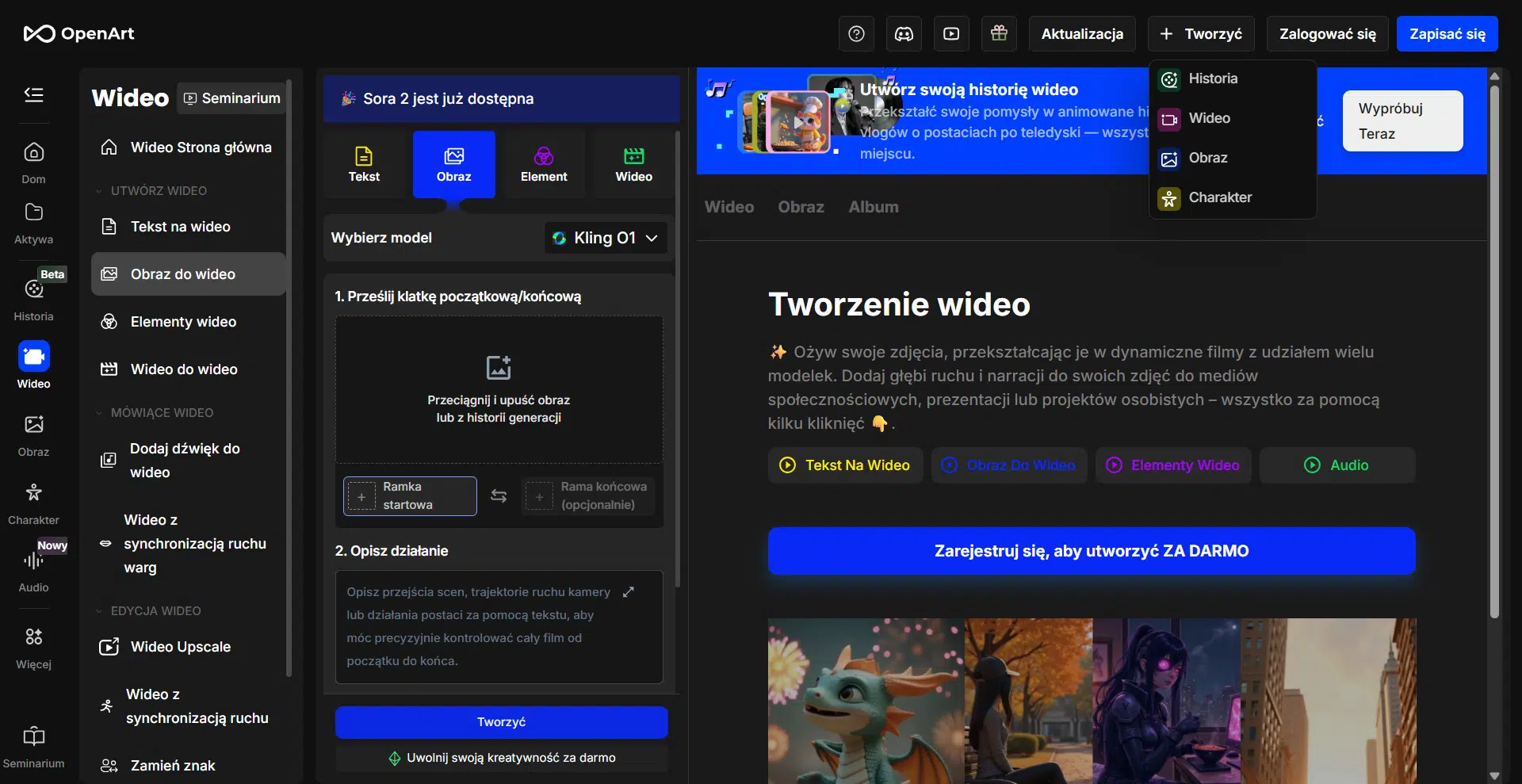
How to Create an AI Influencer in OpenArt Step by Step
The process is surprisingly simple, but it gives you a huge amount of creative control. It can be divided into three phases.
Phase One – Character Design
You choose a basic look or build it from scratch. You match facial features, skin color, body structure, hair, characteristic elements. The tool allows you to create both classic fashion models and more artistic or distinctive characters.
Phase two – setting the style
You decide on the atmosphere of the photos. They can be minimalist, luxurious, holiday, studio, or pattern-breaking. Thanks to this, the AI influencer begins to have a personality and stand out in style, which is crucial in social media.
Tercera phase – generating sessions
OpenArt allows you to generate individual images or entire series as if the character were physically on set. You can create:
fashion lookbooks
photos for Instagram
Product Ads
Shots for the online store
Lifestyle content
Premium subscription content
This creates a complete image library of the character that can be run as a full-fledged influencer.
Uses of AI influencers in marketing, social media, and e-commerce
OpenArt AI has become a tool that has opened up entirely new monetization models. An AI influencer can be created once and then exploited for months or years in a variety of applications.
The most important of them are:
Creating anonymous social media accounts
Perfect for creators who want to build a brand without showing their faces. Influencer AI generates hundreds of photos that look like they’re from a professional plan.
Brand Ad Campaigns
Instead of ordering expensive sessions, you can generate ready-made materials in a fixed aesthetic.
E-commerce and online stores
OpenArt allows you to generate product, lifestyle or banner photos without the need to photograph models.
Subscription projects
Virtual influencers are used in the premium industry, AI creators, as well as subscription models.
Creative materials for agencies
This is a huge time saver, and at the same time the ability to create unique visual stories.
Many creators are now monetizing 100 percent AI-powered accounts, generating engaging content, aesthetically pleasing feeds, and consistent profile traffic.
Why OpenArt AI is the best choice on the market right now
The market for AI tools to generate people is huge, but most of them suffer from the same problems: lack of character consistency, poor maintenance of facial characteristics, and limited creative parameters.
OpenArt solves all of this and adds something more – an intuitive work environment that even a person with no AI experience can handle.
The most important advantages include:
consistency of the appearance of the characters in each photo
very high quality graphics
Extensive customization of styles and scenes
Generation Rate
the ability to create entire sessions and lookbooks
easy to use in social media and campaigns
In practice, it is a tool that sets a new standard in the creation of digital faces and brands.
Summary
OpenArt AI is currently the best tool for creating AI influencers, as well as complete photoshoots and lifestyle materials for brands. It gives you full control over your image, ensures a consistent identity for your characters, and allows you to scale your content in a way that no photo session could.
If you’re planning to grow your accounts without showing your face, create a brand in social media, or want to build your own AI influencer, start right here.
FAQ – Frequently Asked Questions About OpenArt AI
Will an influencer created in OpenArt look the same in all photos
Yes. This is the biggest advantage of the platform. OpenArt has created one of the most stable identity systems that allows you to generate hundreds of shots with the same face, style, and characteristics.
Can I use an AI influencer commercially
Yes. OpenArt allows the commercial use of the generated materials, making it an ideal tool for brands, stores, and creators.
Can I create more than one character
Yes. You can create a whole set of characters – models, athletes, lifestyle heroes, and even members of one virtual family. Each character maintains consistency.
Is OpenArt suitable for beginners
Yes. The platform is designed so that anyone can create professional photos without any knowledge of prompting. The interface is intuitive and clear.
Is photo quality suitable for Instagram or ad campaigns
Definitely yes. The photos look like they were taken by a professional photographer with beauty or fashion lighting. They are suitable for advertisements, banners, lookbooks and social media.
Can an AI influencer run an account without my participation
Yes, if you add automation. You can connect accounts to AI tools for scheduling posts, generating descriptions, and hashtags. This is the basic operating model of accounts run entirely by artificial intelligence.
Can I create content with different styles – premium, fashion, sport, luxury
Yes. OpenArt allows you to change the styles of your sessions at any time. The character remains the same, only the scenery, light and atmosphere change.
What you should know about OpenArt AI
OpenArt AI sits within the broader space of AI image generation, a category that has become essential for creators, marketers, and small businesses that need to publish high-quality content at speed. Whether you are building an AI influencer brand, scaling a content studio, or simply trying to keep up with platform algorithms, picking the right ai image generation workflow can save dozens of hours per week and meaningfully change how your content performs.
On this page we go beyond a one-line description and walk through what OpenArt AI is best at, how it compares to alternatives, the typical results creators are seeing in 2026, and the pitfalls that experienced users tell us to avoid. The goal is to help you decide — quickly and confidently — whether this is the right tool to add to your stack right now or whether a different option in our AI Tools Directory may fit your use case better.
Who is OpenArt AI actually built for?
The honest answer is that most ai image generation tools today are marketed to “everyone”, but in practice they tend to serve a few clearly defined creator profiles much better than others. Based on our own testing and on community feedback inside the AI Video Influencer Discord and our reader surveys, OpenArt AI is a strong fit if you regularly produce social media visuals, thumbnails, product mockups, editorial illustrations, AI influencer photoshoots, if you publish more than a few pieces of content per week, and if you value iteration speed over absolute pixel-perfect control. Solo creators, lean marketing teams, e‑commerce brands, and AI influencer operators are the four groups that consistently get the most out of this category in 2026.
If your workflow involves long-form cinematic projects, broadcast-grade output, or strict brand-safety pipelines, you may still want to pair OpenArt AI with a more traditional production tool. We cover those hybrid workflows in our deeper guides about creating an AI influencer and our complete AI tools breakdown.
Strengths, limits, and how it compares
The biggest strength of OpenArt AI — and of modern ai image generation tools in general — is the speed at which a single creator can now ship work that would have required a small agency just two years ago. The most common limits are around fine creative control, consistency across a series of assets, and the learning curve of prompt design. Most users hit a productivity plateau in the first two weeks, and breaking past that plateau usually comes from studying prompt patterns, reusing presets, and building a small internal “style library” of prompts and reference images that you can call on quickly.
When comparing tools in this category we focus on five concrete dimensions: output quality, generation speed, pricing per finished asset, integrations with the rest of a creator workflow, and how transparent the company is about training data and commercial usage rights. OpenArt AI performs differently on each of these axes, which is why a side-by-side comparison is far more useful than a single star rating. You can use our tools directory to compare across the full landscape.
Frequently asked questions
Is OpenArt AI good for beginners?
Yes — most ai image generation tools in 2026 are deliberately designed with a low entry barrier. You can usually get a usable first result within a few minutes, and most platforms now include templates, sample prompts, and tutorials that shorten the learning curve. The real beginner challenge is not the tool itself; it is learning to write prompts that consistently produce the look and feel you want.
Can I use the output commercially?
It depends on the plan you are on. Free tiers almost always restrict commercial use, and even paid plans often have conditions around training data, attribution, or platform-specific rules. Always re-read the latest terms before you ship a campaign, especially if you are running paid social ads or selling physical products that feature the generated content.
How does OpenArt AI compare to free alternatives?
Free tools have improved enormously and can absolutely cover basic use cases. The trade-offs typically show up in three places: output resolution, queue waiting times during peak hours, and the ability to use the result commercially. For occasional personal projects, free is often fine. For anything client-facing, brand-critical, or part of a paid funnel, a paid plan is usually the cheaper choice once you factor in your own time.
Do I need any technical skills?
No formal technical background is required. Comfort with experimenting, reading short documentation pages, and treating prompts as a small craft will take you most of the way. If you want to push into more advanced territory — fine-tuning, LoRA training, API integrations — that is when a developer mindset starts to pay off, but it is not a prerequisite to getting professional-looking work.
What to read next
If OpenArt AI sounds like a fit, the natural next step is to combine it with the rest of your AI stack so you are not jumping between dozens of single-purpose tools. We strongly recommend starting from our free AI tools for influencers guide, then layering paid options where the time savings clearly justify the cost. Creators who treat their stack as a system — rather than a collection of one-off tools — tend to be the ones who scale most predictably in 2026.
You can also explore deeper category guides on AI video generators, AI image generators, AI voice tools, and AI transcription. Each guide includes our updated 2026 picks, pricing notes, and the workflow we recommend depending on whether you are a solo creator, agency, or in-house team.